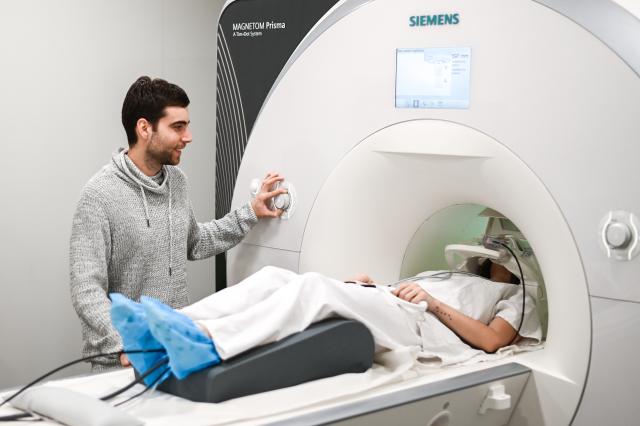
Brain imaging has become a cornerstone of neuroscience and clinical medicine. Techniques like functional MRI (fMRI) allow scientists and doctors to “see” brain activity in real time, and structural scans (MRI, CT) provide detailed maps of brain anatomy. But how reliable are these images when it comes to understanding actual brain function?
The Basics of fMRI
Functional MRI works by detecting changes in blood flow and oxygen levels in the brain. The assumption is straightforward: regions with more blood flow are more active because neurons need more oxygen when they fire. This assumption underlies much of modern cognitive neuroscience and clinical assessment.
Why the Picture Might Be Misleading
Recent research has shown that this assumption doesn’t always hold. In some brain networks — like the default mode network, which is active during memory recall or daydreaming — neurons can increase their activity without a corresponding increase in blood flow. This means fMRI signals might underestimate or overestimate true neural activity.
A study on over 40 healthy volunteers compared conventional fMRI readings with more direct measures of oxygen consumption. The results revealed that roughly 40% of signals in traditional fMRI scans may not accurately reflect actual brain activity.
This isn’t the first time the field has had to reconsider the limits of imaging. In 2009, the infamous “dead salmon study” highlighted statistical errors that could produce apparent brain activity in a deceased fish — a stark reminder that imaging is only as accurate as the methods and assumptions behind it.
Implications for Research and Medicine
Clinical diagnoses may overstate damage: Structural or functional changes on a scan do not always correlate perfectly with cognitive ability or quality of life.
Caution with research conclusions: Thousands of studies rely on fMRI data; this new understanding suggests that some findings may need re-evaluation.
Function over form: Observing cognitive function, behavior, and daily abilities often provides a more accurate picture of brain health than imaging alone.
The Bottom Line
Brain scans are powerful tools, but they don’t tell the whole story. They are best used as one piece of a larger assessment that includes cognitive testing, patient history, and functional evaluation. The brain is remarkably adaptable, and imaging only captures a snapshot of complex, dynamic processes.
Ready to optimize your metabolic health?
Book a one-on-one session with me today and start aligning your lifestyle with your body’s natural clock!
📬 Email: feelgoodcs@pm.me
☎️ Phone: +34 634 35 48 92
Discover more from Feel Good Counselling
Subscribe to get the latest posts sent to your email.
