We often focus on what we eat, believing food choice alone determines our health. But when we eat can be just as influential for energy, hormones, repair, and long-term wellbeing.
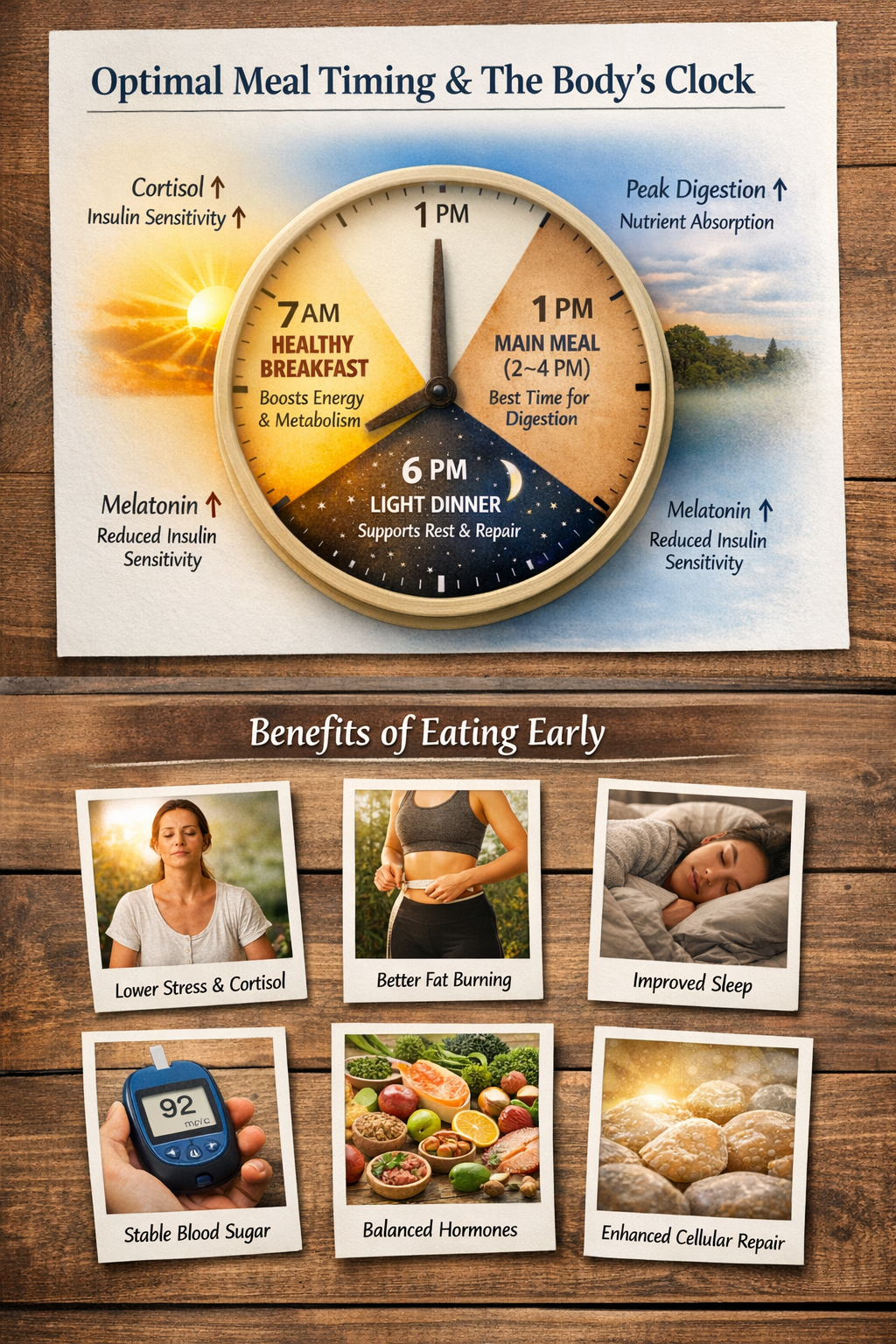
Eating in tune with the body’s natural rhythms supports digestion, metabolic health, fat burning, sleep quality, and tissue repair. This is not about rigid rules, but about alignment with how the human body is designed to function.
The Body’s Natural Rhythm
Our bodies follow a circadian rhythm — a roughly 24-hour cycle that coordinates hormones, metabolism, and cellular repair in response to light and darkness.
In simple terms:
Morning
Cortisol rises naturally to wake us and mobilise energy. Insulin sensitivity is highest, digestion is efficient, and the body is primed to process nutrients.
Afternoon
Energy remains stable and nutrient handling is still effective. This is often the body’s strongest window for a substantial meal.
Evening & night
Melatonin begins to rise, signalling rest, repair, and regeneration. Insulin sensitivity drops, digestion slows, and the body shifts its priority from processing food to repairing tissues, balancing hormones, and restoring the nervous system.
Eating large or heavy meals late in the day can interfere with these natural processes.
Eating earlier, by contrast, supports hormonal harmony and allows overnight repair to proceed uninterrupted.
Circadian-Aligned Meal Timing (A Gentle Framework)
Rather than strict rules, think of this as a biological rhythm to lean into.
Morning
Eating within an hour or two of waking can:
- provide steady energy for the day
- prevent prolonged cortisol
- support nutrient absorption.
That said, some metabolically healthy or fat-adapted individuals may not feel hungry immediately upon waking — and that can be perfectly appropriate. Appetite, metabolic flexibility, and individual biology matter.
Main meal: early to mid-afternoon (around 2–4 pm)
This timing:
- optimises digestion and nutrient use
- supports stable insulin levels
- allows a longer overnight fast, encouraging fat burning and repair
Evening
A light meal or no food at all suits many people.
- warm herbal teas are fine,
- digestion is allowed to wind down
- melatonin, growth hormone, and connective-tissue repair can rise naturally
This pattern tends to signal safety and calm to the nervous system — a prerequisite for healing.
Why Eating With Your Body Clock Helps
When meal timing aligns with circadian biology, many people notice:
- Lower stress and cortisol — the nervous system is no longer fighting the clock
- Improved fat burning — the body can access stored energy overnight
- Better sleep quality — digestion no longer competes with melatonin
- Enhanced skin, hair, and connective-tissue repair — collagen synthesis and cellular repair peak during night-time rest
A Simple, Real-Life Shift
Many people notice a difference simply by moving their main meal earlier.For example, eating a substantial lunch at 2–3 pm and keeping the evening light often leads to:
- deeper, more continuous sleep
- waking calmer and more refreshed
- less evening hunger
- improved body composition over time
These changes often occur without altering food quality or calories — only timing.
What the Research Shows
Human studies consistently show that earlier eating supports better metabolic outcomes.
People who eat their main calories earlier in the day tend to lose more weight on the same caloric intake than late eaters.
High-calorie breakfasts are associated with lower daily glucose, insulin, ghrelin (hunger hormone), and reduced appetite compared to consuming the same calories at dinner.
Delayed eating has been linked to impaired insulin sensitivity, disrupted energy expenditure, and altered circadian hormone rhythms involving appetite, stress, and sleep.
Restricting food intake to the morning or earlier part of the day has been shown to improve
- insulin sensitivity
- beta-cell responsiveness blood pressure
- inflammation
- oxidative stress
- appetite regulation
The most extreme example of circadian disruption is night-eating syndrome, which is strongly associated with metabolic dysfunction and obesity.
Importantly, emerging research suggests that chronotype (whether someone is naturally more morning- or evening-oriented) may influence optimal eating times — though this area is still under-researched. Individual variation matters.
Small Adjustments, Meaningful Impact
Even modest changes — such as eating dinner an hour earlier or allowing a longer overnight fast — can produce noticeable benefits.This approach is:
- gentle
- sustainable
- adaptable
- deeply aligned with natural rhythms
The goal is not perfection, but coherence — allowing the body to work with time rather than against it.
Curious what your own optimal rhythm might be
Book a 1:1 session and explore your unique metabolic, hormonal and nervous system patterns.
Contact Tanya:
📞 +34 634 35 48 92
📧 feelgoodcs@pm.me
Discover more from Feel Good Counselling
Subscribe to get the latest posts sent to your email.
