
How Does the Body Create Internal UV Light?
1. Melanin and Bio-Photon Emission
Melanin, the pigment in our skin, hair, and eyes, plays a key role in light absorption and transformation. Even when external UV light is limited in winter, our cells emit biophotons—tiny packets of light energy. These emissions activate biochemical processes, including those linked to vitamin D synthesis.
2. Water and Infrared Light Interaction
Within our cells, structured water (EZ water) absorbs infrared light from body heat, metabolism, and the environment. This structured water can store and amplify energy, producing light emissions—including ultraviolet frequencies—that influence cellular functions.
3. Mitochondria as Light Generators
Our mitochondria, the energy centers of our cells, generate infrared and near-UV light during energy production (oxidative phosphorylation). This internal light may help trigger vitamin D-like processes.
Enhanced mitochondrial function (through cold exposure, movement, and proper nutrition) improves biophoton generation and energy efficiency.
4. Cholesterol and Vitamin D Synthesis
Cholesterol is the raw material for vitamin D production. In the presence of internal or external UV light, cholesterol transforms into pre-vitamin D3, which the liver and kidneys convert into active vitamin D.
This suggests that our internal UV production may help regulate vitamin D levels, even in low-light seasons.
Cold Exposure and Internal UV Production
Cold thermogenesis (e.g., winter air, cold showers) improves mitochondrial efficiency and increases biophoton emissions, supporting internal UV generation.
Traditional cultures thrived in cold environments without modern supplements by activating natural light-producing mechanisms in the body.
What This Means for Health
Even in winter, our bodies generate internal UV light to support biological processes, including vitamin D synthesis. You can optimize this process by:
Getting natural light exposure (even on cloudy days)
Practicing cold therapy to enhance mitochondrial function
Engaging in movement to stimulate energy production
Eating cholesterol-rich, fat-soluble vitamin foods (e.g., eggs, butter, liver)
Further Reading & Research
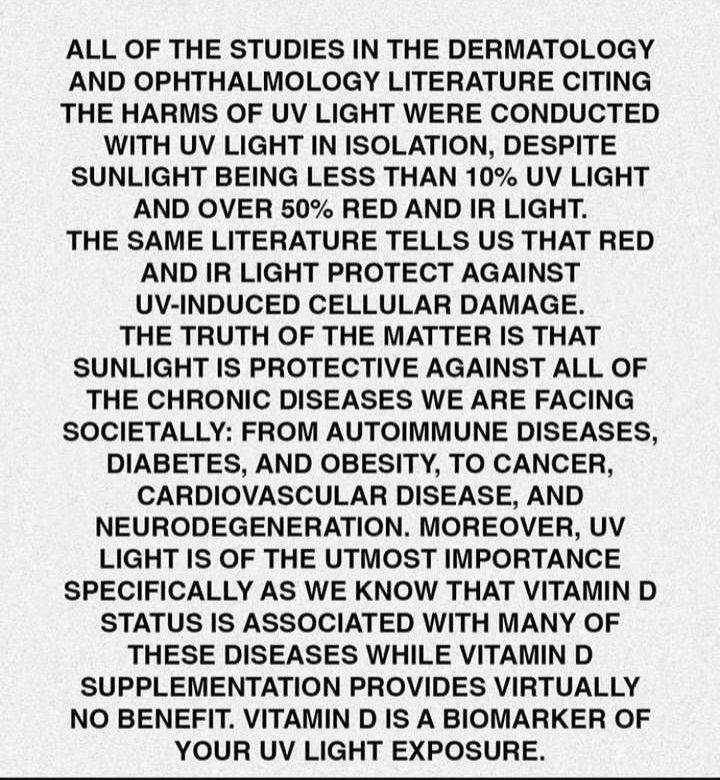
The sun emits a broad spectrum of light including UV, blue, green and red. It is the light from the sun, not the Vitamin D, which possesses the beneficial effect on human health.
—
Additional Insights: Light, Melatonin, and Mitochondria
Humans Emit Light in a Diurnal Rhythm
Scientific research confirms that human cells emit weak biophotons in a natural day-night cycle.
Peak biophoton emission: Afternoon
Lowest biophoton emission: Night
This rhythm is influenced by metabolic activity, oxidative stress, and circadian biology.
Melatonin as a Winter Vitamin D Substitute
While UVB-driven vitamin D dominates in summer, melatonin takes over in winter.
Melatonin is not just a sleep hormone—it’s a mitochondrial protector and antioxidant.
It’s produced in the pineal gland at night but also inside mitochondria when exposed to infrared light from sunlight, fire, or body heat.
This explains why firelight, saunas, and grounding support health in winter.
Mitochondria Emit Infrared Light
Mitochondria generate heat and infrared radiation (IR) as a byproduct of energy production.
Near-infrared (NIR) light stimulates cytochrome c oxidase, a key enzyme in mitochondrial function.
This enhances cellular health, repair, and energy efficiency.
—
Book a New Biology Consultation.
Contact Tanya!
📝 book@feelgoodcs.com
📞 +34 634 35 48 92
Discover more from Feel Good Counselling
Subscribe to get the latest posts sent to your email.
